


Desparate Macaroon Girls : english version |
2008 mar
20
|



Not a single day goes by when I don’t get loads of requests for advice on making macaroons! Don’t freak out! If you follow the recipes attentively, they do work.
Have a look just to help you
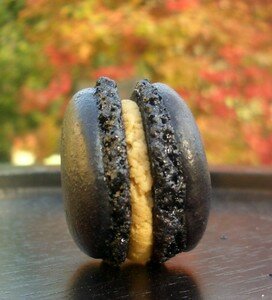
Just look at « Miss macaroon bis » Lorette, or Leelooo, Soso, Stéphane and other bloggers who have succeeded. Not to mention all the e-mailers that I’ve personally guided through the recipes—step-by-step at times—and whose mouth-watering photos prove that anyone can make macaroons if they put their minds to it. Props are certainly due to our “Super Julie”, the wiz behind the basic recipe taught at Valrhona’s École du Grand Chocolat. I’ve added a few personal touches, but overall I’m simply a good student.
Mastering the Art of Macaroons
(Formatted to take into account the multitude of questions that are sure to arise!)
Making beautiful macaroons is not difficult, but it is demanding. You’ll need organisation, the right tools, high-quality ingredients and time. You can’t on a whim decide to whip some up as an afternoon snack. Sorry, but making pastry doesn’t work like that!
Macaroons are definitely worth the trouble!

Step-by-step demonstration
The recipe with Italian meringue:
5 days prior: Weigh 2 quantities of 50 g of egg whites that have been separated from their yolks. These should be kept in airtight containers and placed in the fridge (or freezer if you plan on using them later).
2 days prior: Remove the whites from the fridge so they can come up to room temperature.
1 day prior: Weigh 150 g of almond meal, spread it out on a cookie sheet and roast it in the oven for 10 minutes at 150°. Allow the almond meal to cool. Weigh 150 g of confectioner’s sugar (lightly starched if you can find it). Sift the sugar together with the almond meal, cover and set aside. Or, skip all this sifting and toss the lot into your food processor!
Make your ganaches: plain, or flavored to your liking. For a whipped ganache, which I recommend since it’s lighter, let your ganaches cool and add twice their weight in whipped cream (weighed before whipping!) and place them in the fridge. They need a good 24 hours in there to be ready for use.
The BIG DAY, morning: Weigh 35 g of sugar for the meringue, add to that 5 g of dehydrated egg whites (not mandatory). Set aside a few drops of lemon juice and the tiniest pinch of salt. You really don’t need either, let’s just say it’s psychological back-up! For the syrup, weigh inside a small boiler 150 g of sugar. Weigh 50 g of water. Cover 3 perforated baking sheets with parchment paper or silicon-lined baking paper, the latter being preferable if you want to end up with macaroon shells that are smooth, cooked evenly, but not hollow. (If you went the 40 g egg white route, 2 baking sheets will do). Get your pastry bag ready, for which you’ll need a 10 mm tip. Have it turned upside down and ready to be filled. Make sure that you have within reach the food colorings you’ve chosen, as well as a small sifter with cacao, black sesame seeds, crushed nuts or spices, or whatever else you plan to use for decorating the macaroon shells.
Last but not least, don’t forget your trusty candy thermometer! For more details and photos, click on the link “Bons Plans”

The BIG DAY, afternoon: Preheat the over to 145° (confection heat if you have the option) and place your three baking sheets inside, each on its own rack as long as they can all fit. It’s certainly okay to cook one sheet at a time.
AND NOW FOR THE BIG MOMENT!
Gently beat 50 g of egg whites with a pinch of salt and 2 drops of lemon juice. When they whites begin to foam, incorporate the sugar in three separate parts.
While you’re doing this, add your 50 g of water to the sugar for the syrup. Place over a medium flame, and stir a bit to dissolve the sugar. Make sure not to stir once the syrup begins to heat.
Place your thermometer in the syrup and program it to go off once the syrup reaches 110° so that you can remove it from the heat that point.
Keep an eye on the egg whites. Speed up the mixer; the meringue should become shiny and firm. Then, gently pour the syrup in a steady stream down the side of the bowl of the stand mixer. Voilà—you’ve made Italian meringue!
Hard part’s over, no need to rush. Continue to beat the meringue for about 10 minutes, or until it is cooled. At this point you can speed up the mixer.
Mix the other 50 g of egg whites with the almond/sugar mixture by incorporating them with a rubber spatula. Add a coloring of your choice.
When the meringue is completely cooled—about 40°—stop the mixer. Take the bit of meringue stuck to the beaters, apply a dab to the 4 corners of each piece of parchment paper or silicone paper so that they stick to the baking sheet while you pipe the shells. Incorporate the meringue to the almond mixture. Starting from the middle, work the spatula from the bottom towards the top. Do this for about 2 to 3 minutes, and you should have a shiny, smooth, pliable, quasi-liquid mixture that resembles magma.
When you lift the spatula, a thick magma-esque ribbon of batter should fall back down in to the bowl. This is the key step of “macaroonnage.” If you haven’t reach this point before forming your shells, they will have a tiny peak at the top instead of rounded cap.
Transfer the batter to the pastry bag and pipe small, evenly-space dollops onto your baking sheet. With the 50 g version of the recipe, I get exactly 100 shells, in other words 50 macaroons total.
You might find it necessary to tap the baking sheets on the counter to ensure that all your shells are smoothed down.
Sprinkle with whatever toppings you have chosen and put the racks in the oven for 13 minutes.
Many recipes call for a 2-hour period of leaving the macaroons out so their crust develops, but I find this unnecessary. Some people swear that this is the key to baking perfect macaroons. I’ll let you decide!
Once you remove the shells from the oven, place the sheets on cooling racks and allow them to cool. They should pop right off the baking sheets without need for coercion. They should be super smooth, with their typical little collar, and baked to perfection.

Whip the ganache—if that is what you are using for a filling—like you would a whipped cream and transfer it to a pastry bag. You’ll need to take each macaroon shell in your hand, and, using your thumb, gently press down on the underside in order to make a slight indentation. This is to ensure that once the shells cool, there is room for the ganache.
Nota bene: This recipe is adapted to my oven, which is extremely reliable and precise in terms of temperature. Since no two ovens are exactly alike, you’ll need to test yours out! One thing for sure: if you have the option of convection heat, no need to play around with wooden spoons to keep the door ajar.
Preservation: Macaroons freeze very well. I prefer to freeze the ungarnished shells, and then fill them 2 days before serving in order for the flavors to have ample time to develop. You can also fill them and freeze them, but in that case you’ll need to add a bit of neutral-flavored honey to the ganache so that is remains soft when frozen. A quick 30 minutes at room temperature and your macaroons are ready to serve!
If you apply yourself and put in a little hard work, your efforts will pay off. Don’t give up! With this recipe, lots of others have made macaroons as good as mine!
I await your feedback: mishaps, successes, photos and questions if you still have any!

Troubleshooting:
The Italian meringue doesn’t firm up
– the shells are hollow underneath – Too much air beaten into the batter during the “macaroonnage”
– shells crack – Unsteadiness while piping the batter – collar doesn’t form, cracks do
– Not knowing your oven : try different temperatures, different baking times
But what type of oven should I use?
A convection oven is without a doubt the optimal choice, but many people succeed in making macaroons with gas or electric ovens, and some have even made macaroons in mini toaster ovens, so don’t despair if you don’t have a convection oven at your disposal!
This article is at times a bit exaggerated and to be taken with a grain of salt, but it has already proven helpful to many.
I recently changed my oven in September and it took me a good month to find the right setting for baking macaroons!
Conclusion:
Mastering one’s oven is indispensable in order to have perfectly formed macaroon shells, including a nice collar, uniform doneness, etc. This implies knowing how many baking sheets you can place in the oven at one time! Don’t give up, hang in there and you’ll get it eventually!

Afterword:
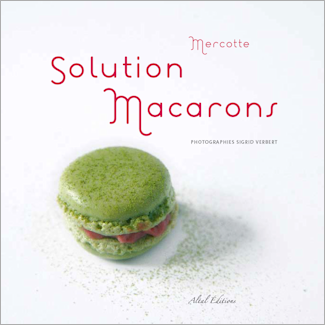
It’s been two years since this recipe was first posted, and obviously lots of things have evolved. For instance, the use of Italian meringue is not all-important, and in fact equally good results can be had by using a basic meringue (see Recipe Summary). For beginners, the basic meringue method is both faster and relatively fool-proof. For a more complete guide to making macaroons, and for more helpful tips and tricks, check out my book :Solution Macarons...
 Actualisation : Optimiser la réussite des macarons, retour aux fondamentaux | 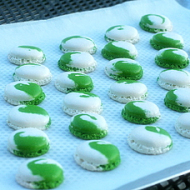 Concours photos macarons | 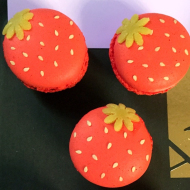 Finale du Nationale du Concours Macarons Amateur 2015 | 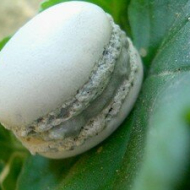 Macarons à la ganache montée |










Omygod ! but you’re fluent in english. Nous allons bientôt voir une déferlante de macarons outre manche et outre atlantique 😉
AND she speak english !!! well well well !!
ben moi très mal…hi hi, mais je suis admirative!
biz !
I knew you’r fluent in english 🙂
Ma quand même, pourvu qu’ils n’y mettent leur leur Jello :))) ce serait un crime de lèse macaron
enjoy your stay !
kisses’n huggs
So perfect during your English week 😉 Tu ramènes des macarons à la marmite ou à la marmelade?!
Bonjour! I enjoyed reading your instructions for making macarons, you are very kind in sharing your secrets. Thank you!
« Your macarons are rich. Your macarons are rich. Your macarons are rich… »
Sorry, but I’m learning english too and heu… bon, it is not really fastoche everyday, but heu… I do des efforts, hein ! 😉
Ils sont parfaits, trop beaux
Good job this english versions!!
Congratulations…
Bye
Moi tu vois, l’anglais comme on dit… j’ai les bases mais pas les bonnes! Mais bravo, c’est la classe!
Oh great ! Your macaroons in English ! When i’ve started to read this article I haven’t notice that it was in English lol !
On est sur la meme longueur dondes, je suis en train de rediger un petit article aussi car les emails abondent a ce sujet. Je suis devenue fan des macarons a la meringue de base dite Francaise car avec toutes les commandes ca me facilite le temps et l’organisation, mais quand c’est pour nous,ils sont a la meringue Italienne.
Est ce que je les réussirai mieux avec la recette in english ??? That is the question …
Where is Mercotte?
Mercotte is in the kitchen.
Oh, thank you so much i’d improve my english …
Oh thank you so much! Comme ça, d’une pierre deux coups, je révise et la technique merveilleuse des macarons, et mes bases anglo-phones. Merci, plus que jamais, Mercotte!
[…] For the english version clic Here […] : je n’ai pas cliqué ici et pourtant je suis tombé par hasard sur la version en Anglais !!!!!!!!!!! Bizarre.
Bon retour chez nous pour ce WE.
Oh my god, I am just back from London too !
I had cheesecakes, full english breakfasts each morning, curries of course, crumpets and scones … mummmmm that was so delicious !
et voili et voilou… Notre Mercotte Nationale qui est en train de vendre « notre » (plutôt le sien) patrimoine aux anglais… C’est une terrible nouvelle… Il faut nous mobiliser… Préparons les pancartes… » Non à la délocalisation de Mercotte » Inscrivons la au patrimoine de l’humanité »…
Ah non!!! pas les macarons quand même…
Grosses bises
Bonjour!
You have got a wonderful site! Just love the pictures and your recipes. =)
While friends at your site are getting better with their English, I hope to get better with my French. 😉
Will be dropping by more often!
Merci! A bientot!
Thanks for the wonderful recipe and tips, Mercotte! I am finally getting fairly nice looking macarons using your recipe, although the collar doesn’t remain as high after removal from the oven (it sinks a little). But, I don’t really mind that. I love that the macarons don’t have to sit out for a while. For the previous recipe I was using, they had to sit for a few hours.
My problem is getting large air pockets under the shell – I have tried this recipe 3 times already, and I have been experimenting with a range of oven temperatures, convection vs conventional, and syrup temps at 110deg C and 120deg C. The convection oven at 145deg C as you recommended still produces the best result except for the air pocket – the actual macaron almond meringue ends up as a thin layer sitting on the foot of the macaron. I am not sure that the problem could be. The macarons taste good, but the air pockets are unsightly once you’ve bitten into the macaron, and of course the entire shell shatters because there’s nothing underneath to hold it up.
Have you any advice on what I might try? I live in a very humid climate but have made sure to only experiment on hot and non-rainy days.
I have been wanting to try macarons, since I can’t eat grain, but my other restriction is that I cannot have sugar either, only honey. Helen, from Tartelette, suggested trying an Italian macaron. So after reading your tutorial, I thought I’d ask for suggestions before trying this for the first time. What would you recommend for substituting honey? Thank you.
Hi, Mercotte, Im from Mexico, and I´m starting to bake macarons.
I´ve done the chocolate ones really good, but only those ones, though I´m really having problems with the others, the ones without cocoa. I don´t know what I should do to get them fluffy (with the body it should be).
Thank you very much, I´ll be waiting for your answer.
Diana
Bonjour Mercotte,
Is it possible to make macarons without any nuts? My husband is allergic and wishes soooo much that I could make some for him.
Thank you and I love your site.
Dear Mercotte,
I desperate need your help. I have been doing macarons and bake them with the oven in my apartment. The color change due to the heat but I can manage it. However, my biggest concern is the macarons are always mishaped. Please rescue me. What do I do to fix the problems…
Best regards,
Nga Rogers, Macarons lover.
soy español me gustaria que me mendaran esa receta en español. gracias
Hi, I have the same BIG problem as ShadyLady: huge air pockets underneath the shells. I also have tried different sugar syrup temperature (210C, 215C and 218C) to make the italian meringue, beat the italian meringue to different stiff consistency (medium stiff and stiff stiff) and have experiment with different oven temperature (300F, 320F with or without over door open), still all my macarons look pretty good from the outside but once you bite into it, it’s sadly hollow =( . I noticed from one macaron that cracked a little during baking, the body forms well while baking but once I finished baking and take the tray out from the over, the body sinks away from the shell. How to you cool your macaron? Could the body collapse during the cooling period? Thanks and please help!! I’m desperate, almost finished 5 pounds worth of almond flour experimenting, yet I still can’t get the macaron right.
Jessica : do you use a silicone carpet ? generally it’s better to use special paper and a special perforated baking sheets
some more things here
http://www.mercotte.fr/2008/02/07/summary-of-the-macaron-recipes-january-2008/
It’s not very easy for me to help you I’m sorry !
Bonjour Mercotte,
I used your Italian meringue recipe and it turned out ok, but I do have one question…When the sugar and water solution has been added to the meringue mixture, what sort of consistency should it be before adding to the almond, egg and sugar mixture?
Also, I cannot seem to get the collar on the macarons when cooked, and they are quite hollow – do you have any advice?
Regards,
Emily
Emily : just wait until the eggs and sirop are at 40°C, the consistance is soft ! cook them on a paper not on silicone carpet, change the heat of the oven and try
Bonjour, chere M.me Mercotte.
Aujourd’hui c’est vraiment un bon jour: pourquoi? Parce-que hier j’ai fait tes macarons. J’ai suivi tous, mais vraiment tous tous tous tous, ce que tu m’as dit dans ton email et tous, mais vraiment tous tous tous tous, tes conseils, troucs et astuces dans ton merveilleux livre. J’ai commencé à le faire il y a sept jours avec la separation des blancs et puis j’ai procedé comme tu dis. Le résultat: des merveilleux macarons, avec la collerette, bien lisses sur la surface et vraiment beaux à voir. J’étais très contente hier et je n’ai pas pu résister à le gouter quelq’un: sublime, paradisiaque. Puisque je ne l’avais jamais goutè, comment doivent ils etre dans la bouche lorsqu’ils sont sourtis du four e depuis 48 heures? J’ai les cuits dans mon four simplement avec la chaleur tournant: tu entendais avec la seule chaleur tournante (seulment ventilateur) ou resistence de ciel+de terre + ventilateur?
Ces macarons ne sont pas mon arrive, mais plutot mon point de départ: j’ai encore beaucoup de choses a faire avec les macarons e j’espere de continuer à avoir ton precieux aide.
Merci à tes conseils, je peux dire qu’on à été plus difficile écrire ce message en francais ( en cherchant de me rappeler ce que je etudia au lycée il y a vingt ans) que faire tes macarons. Si tu viens quelque fois in Italie, j’aurais beaucoup de plaisir à te connaitre.
Merci encore. A bientot et bonne dimanche. Un basier. anna
Anna : merci, je t’ai répondu sur la version française !! bises
Hi Mercotte, first of all, thank you for this website, so full of information!
Second, I was wondering why in the french version of the recipe, it calls for 2 quantities of 60g of eggwhites, while in this english version, it calls for 2 quantities of 50g.
Thanks! 🙂
Alexandra : in the past I use to take 60g but now I’ve change for 50g and I think it is better like that. the early recipes were in 2006 and the new ones begin in 2008 and specially when I wrote the book ‘Solutions Macaron »
I just made my first macarons following exactly your instructions and they came out absolutely beautiful!!! The only hickup is that in some of them, the foot is slightly too big and the top of the macarons slid to the side while cooking. Nothing terrible, but I’m wondering why is that happening… any advice?
Thank you! Thank you! Thank you! I will soon be posting some pictures on my blog!
Alexandra : Yes it happens some time, never know why, usually I turn the baking sheets at mid time
Hello!
First of all – thank you so much, on behalf of us all macaron crazy bakers, for the tutorial.
I tried the Italian style macaron today and the shell looks just adorable! BUT… somehow the macaron is oozing out its insides. The foot is kind of swelling out on one side. Hard to explain! It looks almost like a « semi open » seashell! 🙁
Why do you think this happens?
Again, thank you!!
Greetings from a freezing Sweden!
//H
Heidi : perhaps turn the baking sheets after 7 min ! but I cant really see what you mean !!
salut mercotte. quand tu dit les temperatures, est-ce que tu veut dire celcius ou fahrenheit (usa)? j’ai essayé tous tes « steps » mais il était dur dur dur, pas comme lava. je les ai fait de toutes facons and they imploded in the oven! any thoughts? merci!!!!
Sofia :ce sont des degré celsius. Chaque four est différent , et normalement on les réussit , essaie sans meringue italienne c’est plus facile au début
Bonjour Mercotte,
Je suis de la Malasie. Évidemment je suis le fanatique de macarons. J’ai essayé votre recette de macaron plusieurs fois. Malheureusement chaque fois que j’ai fait, deux de trois a échoué. De plus, ses coquilles(obus) forçaient toujours la plupart des temps. J’ai fait a suivi la méthode chaque fois, mais ne peut pas comprendre ce qui est le problème principal de cela. Je cherche désespérément le conseil ou des bouts(pourboires) de vous. Répondez s’il vous plaît à mon message d’avance si possible. Merci beaucoup. Ciao.
May : c’est très difficile de te dire de loin ce qui ne marche pas . As-tu essayé les 2 recettes avec et sans meringue italienne, as-tu lu tous les conseils dans « Solution macarons » où j’essaie de chercher la raison des problèmes ? le climat compte aussi je pense qu’il y a de l’humidité chez toi en Malaisie ce qui complique les choses, peut être qu’il faut les laisser crouter quelques heures ! aie aie pas facile. Bon courage tu vas y arriver j’en suis sûre
Hi Mercotte, thank you so much for this guide, I’m making such nice macarons now, thanks to you!
Take a look at my last results! 🙂
Have a great day!
http://tinyurl.com/yc3g4g9
Hi mercotte, though I have made your macarons a few times already, I would like to make them a little less sweet. Where in the recipe should I reduce the sugar? (I’m using italian meringue)
Thanks!
Aexandra : Either you make the classic french meringue, or if you make the italian meringue you can just put no sugar in the first egg whites instead of 30g
Help! I’ve been making macarons for about three weeks (not terribly long) and have the chocolate ones worked out to a T, they have been perfect. Just the right consistency, tasty, etc. However, my other ones (violette, pistachio, vanilla) all have a (large) gap between the shell and the cookie. How do I prevent this? I don’t have any cracks on the shells, they peel off the parchment without trouble, they have lovely feet. I am baking them in a gas oven (that is slightly unreliable temperature-wise), at 300F for 20 mins (25mins for the chocolate.) After they are piped, I have been letting them set for about 20mins to get that drier skin on the top, then placing them in the oven. I have to keep the door of the oven cracked open with a wooden spoon to maintain the proper temperature otherwise it gets too hot. Am I cooking them for too long? My instinct tells me that my oven is too hot, therefore not allowing the meringue inside the shell to rise properly; or when the meringue rises, it falls because the oven is not at the right temperature. Thank you for the wonderful recipe and instructions!
Pamela : it is not very easy with a gaz oven ! did you separate you eggs white one week before cooking them ? it is very important !
I have been aging the egg whites. A friend said that I am using pretty much the most difficult oven I can for these little confections! I wonder if I am beating too much air into the egg white?
Hi Mercotte!
THANK YOU SO SO MUCH FOR THIS BLOG! It has helped me so much 🙂
I posted my own blog using your steps and photos for guidelines.
http://mm-yumyum.blogspot.com/2010/06/macaron.html
xx
Incroyable que je tombe sur toi. Nous avons une ferme de lavande aux US et cherchons une recette de macarons a la lavande a faire decouvrir a nos clients….C’est overwhelming mais on va essayer…Bravo pour ton blog, il est unique…Eric et Barbara
Thanks for putting this up.
I’ve been trying to find a good website on this subject and related info. Thanks for putting this up.
Hello dear madame Mercotte,
Thank you for the wonderful recipe, video and step by step explanation.
I made my first ever macarons, using your recipe(thank you) and following every and each step.
They looked okay for the first time but I had two problems.
1. The macarons were completely hollow.
2. The foot on most of macarons was not straight, it was higher on one side and lower on the opposite side of the macaron.
I do not know where to post a picture so you can see what I am talking about.
Will you please give me some advice or suggestions on how to solve these two issues?
Thank you for your time in advance, and I hope you have a wonderful day.
Sincerely;
Rachel
Rachel : generally the macarons are hollow if you cook them on a silicone sheat but il you cook them on a paper sheat it’s generally better.
When they are not straight, you can inverse the baking sheet after 7 minutes
have a nice day and good luck !
Thank you for your fast reply and helping out.
Rachel
I have made macarons in a commercial kitchen many times but always baked them in a convection oven. I used your formula last night and followed the instructions to a t. Everything looked great until I put them in the oven at which point the puffed, cracked and oozed to the side. I did not leave them to dry very long as you said it was not necessary with this formula. Should I be laving the oven door slightly open? Any advice on getting them to work in a conventional oven would be sooo very much apreciated.
Kind regards,
Kathleen : It’s not very easy with a conventional oven you must try and try to find the good way for cooking them, each oven is different. I always put them in the oven as soon as I have put them on the paper sheet and I don’t open the door of the oven, never, I use a convection oven
I just came across your site, and watched the video (my french is very limited, only one semester in college) i thought that you did the french meringue, but the version that is written in english is italian, which i think is to complicated…
now you mention to use lemon and salt…that was new to me…
my first batch of macarons didn’t have ‘feet’…but they tasted amazing…in fact we ate them just plain…
the eggs were aged for 4 days, so was it that i overmixed the egg whites…or could it be that i reduced the sugar from the recipe (martha stewart’s) because it was really sweet…help…and are you going to come out with an english version of your book and the video…please, thanks from Cali
SunE lane, Cali : you can find the basic french meringue recipe here
http://www.mercotte.fr/2008/02/07/summary-of-the-macaron-recipes-january-2008/
lemon and salt its just optionnal, you don’t really need them let’s just say it’s psychological back up
My recipe is not to much sugared
the vidéo is coming soon in english probably the book too, and the Ipad and Iphone appli is already in english!
What a wonderful video! I haven’t used the paddle attachment on my mixer for the beginning of the macaronnage yet, will have to try it.
SunE Lane – Martha’s recipe has far too much sugar in it and is by volume not by weight. Macaron recipes should be by weight – will improve your results and consistency drastically. Also, I have never had good luck baking or cooking from a Martha Stewart recipe – oftentimes her proportions are off. Could just be me though 😉
Lemon/Salt – I’ve stopped using these and have figured out how much egg white powder I prefer to use instead. Cream of tartar would work instead of lemon/salt, or best too whipping your egg whites in a copper bowl.
Mercotte said in the video that the French meringue is very simple and fast – that’s why she used it for the video. Wouldn’t you be intimidated by Italian meringue as a first go for macarons? (I tried Italian meringue for my first few tries, gave up then tried French and I use French every time I make macarons except when it is raining or exceptionally humid outside.)
Pamela : yes I also use egg white powder but it’s not so easy to find in France and it’s the same for cream of tartar except if you are a professionnal.
Thanks for all …I’m using italian meringue when I’ve enough time !
thanks Mercotte and Pamela for the great advice…i’m wanting to try adding color but i’ll have to wait till i buy powdered colors…from the many sites i’ve been to, only one use liquid color…
and the cream of tartar, i have but would it be just a pinch…
thanks again for the great advice…and happy Macaron’ing…
SunE Lane : yes just a pinch say about 1g
i love the colors! my daughter would love this if i will bake this for her to bring in school. hope it wont take much of my time.
I would love to know how to get a real Xmas red & Christmas green colour to my macaroons as I haven’t suceeded yet they always seem to turn out pink and pale green even if I use powdred colours any suggestions?
Hi Mercotte,
Thanks so much for sharing the recipe and it surely works for me. This is actually my fifth attempt of baking macaroons using various recipes and tips from the internet but your only works!!! . I ve also learnt that using grease paper gives best result whilst silicon paper turns out to be a failure where the macaroons crack up in the middle. Once again you really made my day !!!
Suriana
Thanks Suriana
tous ces conseils, j’adooore
Bonsoir Mercotte,
I have now made several batches of the French meringue macarons and there is a definite improvement from my sorrow first trial. I have unfortunately become completely addicted to making AND eating these little babes. I had feet issues, »decoloration », undercooked macarons, etc.. but things have settled in very nicely. However, I am still struggling with a MAJOR problem and I don’t know how to correct it. The inside of the macaron is hallow ie il y a une poche d’air entre la coquille du haut et les pieds. It is as though there is NO inside…just a big void. Obviously, when you have filling and two shells are stuck with each other, one cannot easily detect that defect after the bite, but I know it and I think that it is an imperfection (as explained and discussed in other blogs). How can I address this problem?
Merci Mercotte.
I really don’t know why this problems occurs try the italian meringue perhaps,it will be better. Sorry !
Dear mercotte:
I come across to your website and look through your recipes. It very interesting and want to bake and cook food from your site,but I can’t read any french or italian words. Do you have any website in english version at all. please!!!!!!
Solution macaroons my book will be sold to usa as the sweet macaroons in April 2012 and probably the others later on, but not yet my blog, sorry !
dear Mercotte,
Thanks you for yourgreat recipe! My outcome was really great for the first time! But since then, just failure and failure. Collar doesn’t form and the shell cracks! I was read again and again your instruction but still don’t know why. I follow your instructions exactly! my first batch was succesfull! however, my second batch, I replace almond by hazelnut and no collar 🙁 My third batch I use egg white 1 day old in room temperature and no collar at all! I guess it might be my egg white still too fresh! But for second batch, I used 5 days old egg white and still no collar 🙁 How can I fix it? should I wait my egg white older (may be 2 day old in room temperature) and try again?
Moi aussi, je aimé lire la recette en anglais parce que, malheureusement j’ai oublié tout à fait français. La vidéo, cependant, est le complément parfait. Merci et je vais réserver les blancs. J’espère réussir.
Comment a la fois améliorer ses compétence en anglais et en même temps en patisserie, et bien grace à mercotte. Je voulais apprendre à les faire ces macarons et je dois avouer qu’avec cette recette, je n’ai plus d’excuse, heureusement j’étais meilleure en anglais qu’en patisserie, il va falloir que je rattrape le temps perdu maintenant !
😉
Bonjour mer cotte je voudrais vous remercier avant tous pour vos recettes extraordinaire. je voudrais vous demandez pour faire les macarons quelle méthode est la plus efficace faire la meringue française ou italienne. Car il ya des gens qui disent avec la meringue italienne on a plus de chance pour réussir les macarons
Bonjour Eya
c’est vrai, la meringue italienne pardonne beaucoup plus les erreurs ! je ne fais plus que celle ci
C’est bien de regarder la vidée dans la colonne de droite pour appréhender toutes les étapes